
Old 401(k)s & self-managed IRAs
What Are You Paying For That Old Account, And What Are You Getting For It?
If you left a job and left the 401(k) behind, or you opened an IRA and have been managing it yourself, there's a fair question worth answering: there are costs inside that account. Is anyone providing anything in return?
Most people can't answer that, and it isn't their fault. Nobody sends a statement that lines up what you're paying against what you're receiving. A complimentary review walks through both halves of that question for your specific accounts. What you do with the answer is entirely your call.
Does any of this sound like you?
- I have a 401(k) at a company I don't work for anymore, and I honestly haven't looked at it in years.
- I've got an IRA I set up myself. I picked the funds once. That was a while ago.
- I've changed jobs a few times and I'm not totally sure how many accounts are out there.
- Nobody has ever called me about that account. I'm not even sure who I'd call.
You are in very good company
These are not scare statistics. They're just evidence this is normal.
$2.13T
Held in forgotten or left-behind 401(k) accounts in the U.S. as of July 2025, roughly 25% of all 401(k) savings nationally, across 31.9 million accounts.
6 employers
The average American has worked for six. 23% of Americans with retirement accounts still have multiple balances sitting in old or current workplace plans.
32% / 21%
Only 32% have rolled a previous balance into a current workplace plan, and only 21% into a personal IRA. Most have done nothing at all.
The average forgotten or left-behind balance is about $66,691, not a rounding error in most people's retirement picture.
Why this happens
It's not you. It's how the system is built.
When you leave a job, you leave the structure that surrounded that account. The reminders stop. The annual meeting where somebody explained the fund lineup stops. Access becomes a login you never use, and statements go to an address or an inbox folder you don't check. Nothing about that process is designed to hand you off to anyone.
The other honest reason: tracking down an old account is tedious. It often means digging through old paperwork, calling a former employer's benefits line, and getting a recordkeeper on the phone, the kind of task that stays on a list for years. We do this part with people regularly, and it goes a lot faster with someone who knows what to ask for.
Two different accounts, two different gaps
An old 401(k) and a self-managed IRA aren't the same problem. They just end up in the same place
If it's an old 401(k)
The plan was built for employees of a company you no longer work for. You get whatever investment menu that company's plan chose, usually a short list, with no advisor assigned to you personally. There are costs layered into the funds, and sometimes into the account itself, that most participants have never seen laid out in one place. The account keeps charging those whether anyone is paying attention or not.
If it's a self-managed or self-directed IRA
You have far more freedom here, which is a genuine benefit, and it also means every job belongs to you. You pick the investments, decide how much risk is appropriate, monitor it, and judge whether the mix still fits a life that's probably changed since you set it up. Some people do this well. Others made a few choices early on and haven't revisited them since. Only one of those is actually being managed.
What a coordinated relationship adds
The point of working with an advisor isn't the account itself. It's everything around it: ongoing oversight instead of a static allocation, a specific person you can call who knows your situation, and planning that reaches past the balance to your timeline, your taxes, and your other accounts. It also generally means access to a wider range of investment options than a single former employer's plan menu offers. Whether that combination is worth it to you is exactly what a conversation is for.
If the account you're still contributing to is the one you have questions about, that's a different page, see the 401(k) fee review.
And if you have just left the employer rather than left years ago, the old 401(k) is one of four decisions landing at once, see equity compensation at separation, where the option window is the only one of the four with a date that closes permanently.
And if the account is a 401(a) rather than a 401(k), common at utilities, public agencies, universities and hospital systems, the rollover question is a different one, because three provisions stay behind in the plan.
Four things, in about an hour
What a complimentary conversation actually covers
This is a discovery conversation, not a presentation. Here's the shape of it.
Step 1: Find the cost
We look at what's actually inside the account, including fund expense ratios and any account-level charges, and put it in plain numbers.
Step 2: Find the value
Who's reviewing this account? When was it last rebalanced? Does it fit with your other accounts, your taxes, or your timeline? Is the beneficiary current?
Step 3: See the gap
Cost on one side, services actually received on the other. If they line up well, that's good news and we'll say so. If there's a gap, we'll walk through the options.
Step 4: You decide, or decide nothing
No follow-up sequence to escape. If the right answer is “leave it alone,” that's a legitimate outcome and we'll say it out loud.
If working together makes sense to you at some point, the fee is discussed openly during a complimentary review, never a surprise later.
Let's address the obvious thing
Yes, we manage money for a living, and no, that isn't a secret. Here's the part that matters: a rollover isn't automatically better than leaving an account where it is, and anyone who tells you otherwise before looking at your situation is selling, not advising. Plenty of these conversations end with us explaining why the account is fine where it sits. You'll leave this one knowing what you're paying and what you're getting, which is useful information whether you ever work with us or not.
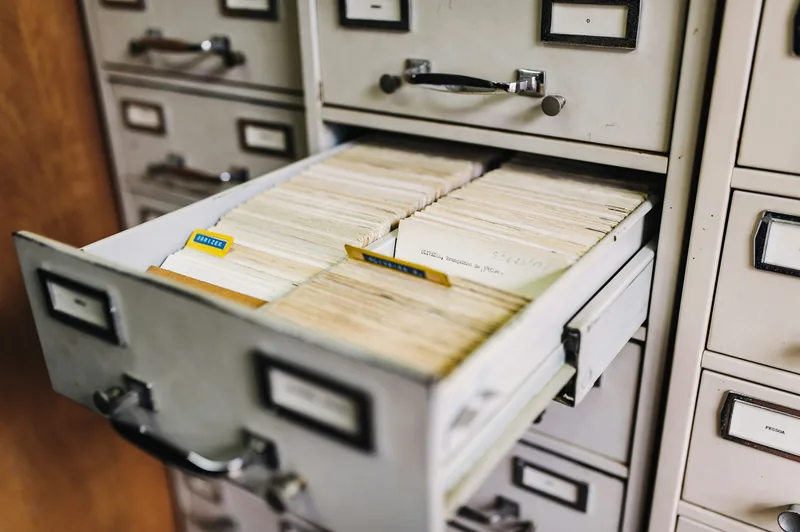
Nobody Is Managing It, and Nobody Was Meant To
An old plan does not misbehave. It simply sits where it was left, in a menu chosen by a former employer for a workforce you are no longer part of, rebalancing to nothing and answering to no one. That is not negligence on anyone's part, it is the default, and the default is what this review exists to interrupt.
Get the old 401(k) and self-managed IRA guide
A short, plain-English guide to what to look for in an old or self-managed retirement account, how to track one down if you've lost touch with it, and the questions worth asking before you change anything. Inside: what an old 401(k) typically costs and how to find those numbers, how to track down an account from a former employer, what to check on a self-managed IRA at least once a year, and the questions worth asking before you decide to move anything.
Request the complimentary Old 401(k) & Self-Managed IRA Guide and it arrives by email.
Check your email. Your Old 401(k) & Self-Managed IRA Guide is on its way.
That did not send. Please try again, or emailBStevens@BAS-Financial.comand we will send the Old 401(k) & Self-Managed IRA Guide over.
Common questions
Are you just trying to get me to move my money?
We understand why you'd ask. Here's the honest answer: we do manage assets, and if we're a good fit for each other, that's how we'd work together. But a rollover isn't automatically the right move, and this review is built to answer a question rather than produce an outcome. Old plans sometimes have features worth keeping, and costs, protections, and available options differ case by case. Some of these conversations end with a recommendation to leave things exactly as they are. You get the information either way.
What if I don't even know where my old 401(k) is?
That's very common, and it's a normal place to start. Old statements, W-2s, or enrollment paperwork usually name the recordkeeper, and a former employer's HR or benefits department can typically point you to the provider. Small balances are sometimes moved automatically into an IRA in your name, so it's worth asking whether that happened. We walk people through this part regularly.
My balance isn't very large. Is this still worth doing?
The average forgotten or left-behind 401(k) balance is about $66,691 (Capitalize, 2025), and many people are surprised to find their account is closer to that than they assumed. Beyond the number, an unreviewed account can drift away from the risk level you originally chose, and beneficiary information often reflects a life stage that's since changed. Both are worth a look independent of the balance.
I manage my own IRA and I like doing it. Is there anything here for me?
There can be. Self-directed investors often come in with a specific question rather than a general one, whether their allocation still matches their timeline, how their accounts overlap, or what a coordinated tax and withdrawal picture would look like. We'll go where your questions are. If your setup is working well, you'll hear that from us.
Find out what that account is costing you, and what it's doing for you
It's been sitting there for years. An hour of attention isn't a big ask, and you don't have to decide anything to find out where you stand. The review is complimentary, the conversation is educational, and leaving the account where it is remains a perfectly good answer.
Book a consultationA 30-minute call. No document gathering beforehand, and no obligation afterwards.
Sources for the figures on this page
Every figure above is a third-party industry citation, not our own data.
Forgotten and left-behind 401(k) balances
- Capitalize, “The True Cost of Forgotten 401(k) Accounts” (2025).
- 31.9 million accounts holding about $2.13 trillion as of July 2025, roughly 25% of all 401(k) savings nationally.
- The same study puts the average forgotten balance at about $66,691.
Employers worked for, and balances left behind
- Fidelity, 2026 study, as reported by Yahoo Finance / 247wallst, July 2026.
What people have actually done with old balances
- Fidelity, 2026 study, as reported by Yahoo Finance / 247wallst, July 2026.
- The two figures are not mutually exclusive; the remainder have consolidated nothing.