

Financial decisions often interact, even when they are made separately.
This page outlines the planning structure used at BAS Financial. It is intended to describe how topics are organized and reviewed, so discussions can be grounded in context rather than isolated decisions.
How We Help
The work is approached as coordination across a financial system, cash flow, assets, liabilities, protection, and planning considerations. The emphasis is on clarity, sequencing, and documenting how decisions relate to stated goals and constraints.
Our Planning Process
Our planning process is designed to help create clarity, coordination, and confidence over time. Rather than focusing on individual products or one-time decisions, we follow a structured, step-by-step approach that builds thoughtfully—much like constructing a well-designed home. Each stage builds on the last, and clients move through the process at a pace that aligns with their goals and circumstances.
PURPOSE: Gathering data and building out The Living Balance Sheet® dashboard
This stage focuses on gathering and organizing all relevant financial information, including accounts, income, assets, liabilities, benefits, and goals. Using this information, we build The Living Balance Sheet®, which provides a clear, coordinated view of how everything fits together. The goal of this stage is clarity—helping ensure decisions are made with a full understanding of the financial picture before any action is taken.
PURPOSE: Understanding how cash flow moves on and off the balance sheet and optimizing it
In this stage, we analyze cash flow and financial efficiency—how money is earned, spent, saved, taxed, and deployed. We identify opportunities to optimize cash flow without sacrificing lifestyle, working to ensure the financial foundation supporting the plan is strong, intentional, and sustainable.
PURPOSE: Protecting, growing wealth, and implementing strategic debt elimination strategies
This stage focuses on actively building the financial structure. We evaluate strategies for growing wealth in alignment with goals while also protecting progress from risk, volatility, and inefficiencies. Debt strategies are addressed intentionally—determining which debts should be eliminated, restructured, optimized, or retained based on interest rates, tax impact, risk, and opportunity cost. The objective is to strengthen the overall structure, not simply eliminate debt emotionally or in isolation.
PURPOSE: Estate and tax planning for future generations
As wealth accumulates, planning expands to reinforcing and fortifying the structure for the long term. This includes advanced tax planning, estate planning, and legacy considerations designed to help protect what has been built and allow wealth to transition efficiently to future generations. This stage may be aspirational for some clients and becomes more relevant over time as the structure grows.
PURPOSE: Ongoing review and adjustments
Financial planning is not a one-time event. This stage represents the ongoing relationship, including regular reviews at your request, coordination, and thoughtful adjustments as life circumstances, income, goals, and tax laws change. The objective is to keep the plan aligned over time and ensure it continues to support what matters most.
This process is not a checklist that must be completed all at once. It is a roadmap that evolves over time. Our role is to meet clients where they are, provide clarity at every step, and build forward intentionally.
The Living Balance Sheet® View
Living Balance Sheet® is used as a planning framework to organize information and support a whole picture review. It provides a consistent way to view key categories side by side so tradeoffs and interactions can be discussed clearly.
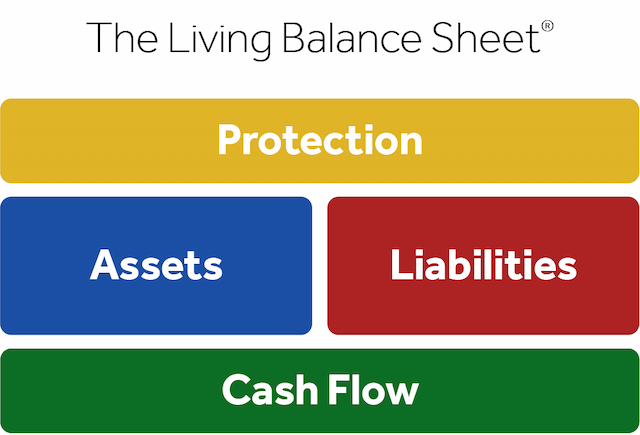
Why include a visual here
Many planning decisions are evaluated in isolation because they arrive at different times and from different sources. A single view can reduce confusion by keeping the discussion anchored to the same categories and definitions.
The framework is used to guide the conversation. It does not represent a guarantee of outcomes, and it does not replace tax, legal, or accounting guidance where those professionals are appropriate.
Who This Structure Tends to Fit
This approach is generally aligned with individuals and business owners who prefer an organized planning process and coordinated decision making, rather than one off or single topic transactions.
If you would like to request an introductory conversation, the intent is to determine whether the planning structure, scope, and expectations are aligned. If there is a fit, next steps are discussed based on priorities and timing.