


When many business owners hear the term “exit planning,” the first thought is often about selling the business and moving on. While that’s one part of the picture, true exit planning goes far deeper. It’s not just about leaving—it’s about building value today and preparing for tomorrow so that when the time comes, you can transition on your terms.
What Is Exit Planning?
Exit planning is a comprehensive strategy that aligns your personal, financial, and business goals. It’s about more than a single event—it’s an ongoing process designed to:
- Grow transferable business value,
- Protect your financial future, and
- Expand the options available when you decide to step away.
Done well, exit planning provides you with control over when and how you transition, whether that means selling to an outside buyer, passing the business to family, or another path entirely.
What Is Succession Planning?
Succession planning is more specific. It focuses on leadership continuity, preparing the right people to step into key roles when you step out. For family-owned businesses, this may involve grooming the next generation. For others, it might mean developing trusted employees to take ownership or assume leadership positions.
Where exit planning looks at the big picture of aligning your wealth, business, and personal legacy, succession planning zeroes in on who will lead and how that transition will take place internally.
Why the Distinction Matters
Understanding the difference between the two is essential for business owners:
- Exit planning ensures your business is attractive, valuable, and ready for transition—on your terms. It’s about maximizing value, protecting your wealth, and aligning with your long-term goals (Investopedia).
- Succession planning ensures continuity and stability by preparing future leaders. This helps preserve culture, retain clients, and avoid disruption during a leadership handoff (DMV Business Lawyers).
- Together, they form a complete strategy—one focused on building wealth and optionality, the other on smooth internal leadership transition.
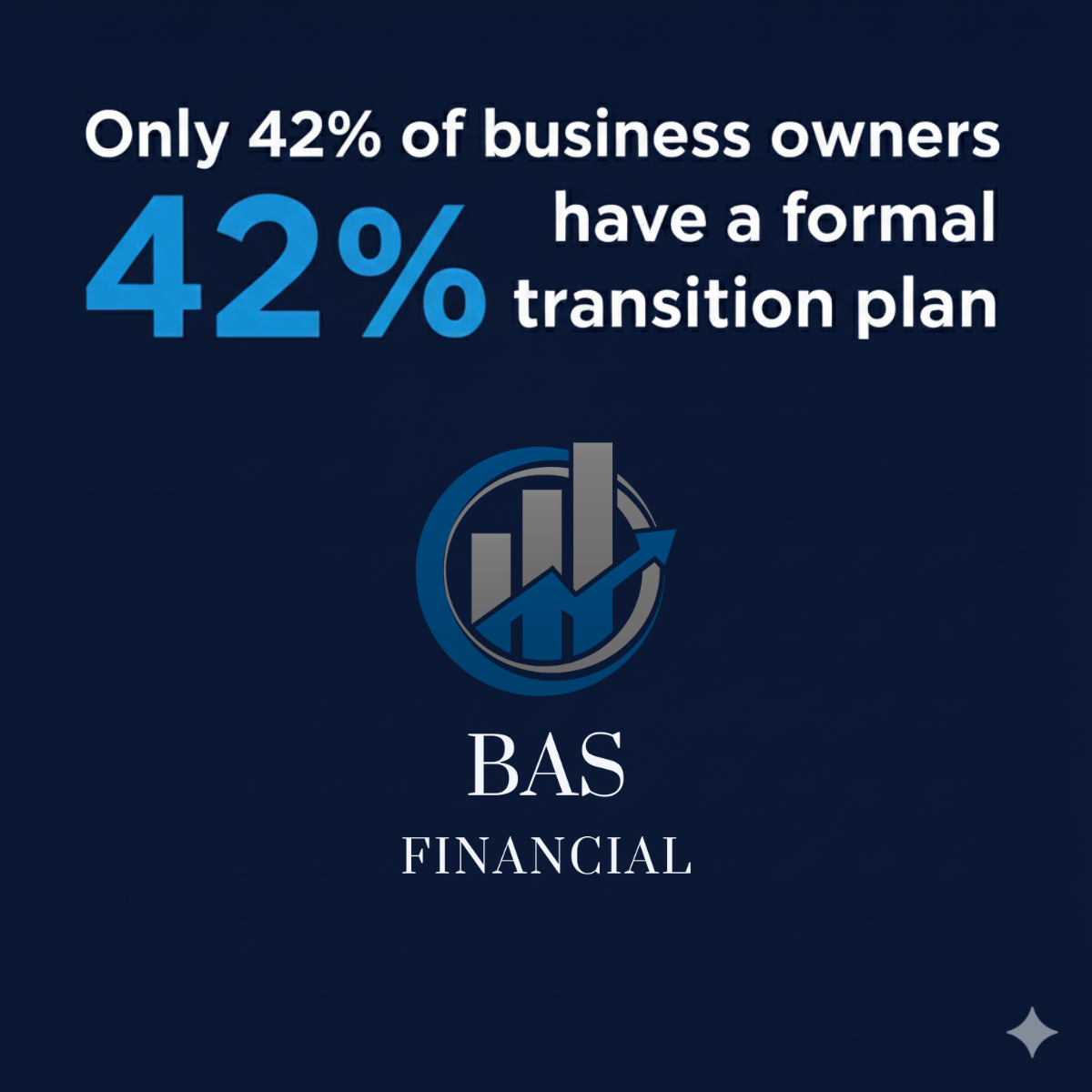
A survey highlighted by Kiplinger found that only 42% of business owners have a formal transition plan, despite nearly half intending to exit in the next five years. This lack of preparation creates unnecessary risk for both the business and the owner’s financial future (Kiplinger).
Exit Planning + Succession Planning = Stronger Future
By integrating both strategies, you can:
- Potentially protect and grow wealth while you’re still leading the business,
- Ensure continuity for employees and clients, and
- Transition with confidence, knowing both value and leadership are secure.
Final Thoughts
Whether your exit is five years away or twenty, the best time to begin planning is now. Exit planning sets the foundation for value and wealth preservation. Succession planning ensures the business you’ve built continues to thrive after you’re gone.
Together, they’re the roadmap to preserving your legacy.
For additional insights, check out our article on Wealth Preservation in a Dynamic Environment.
Take the First Step Today
Do you know what your business is worth today? Understanding your company’s value is the foundation of both exit and succession planning.
👉 Request your complimentary business valuation here.
This simple step gives you clarity and a baseline to build a stronger future.
Sources:
Investopedia – Strategies for Wealth Preservation
DMV Business Lawyers – The Difference Between Exit Planning and Succession Planning
Kiplinger – Key Wake-Up Calls for Ambitious Business Owners
Contact Us
For personalized financial planning and asset management services, visit us at one of our convenient locations:
San Diego Office:
5405 Morehouse Drive, Suite 245
San Diego, CA 92121
Irvine Office:
2875 Michelle Dr, Suite 110
Irvine, CA 92606
To schedule a consultation, please call our office at (909) 307-4945 or email us at bradly_stevens@pacificadvisors.com. We look forward to helping you secure your financial future.