


In today’s unpredictable economic environment, preserving wealth goes far beyond saving money—it’s about making intentional, strategic decisions to protect what you’ve built and prepare for what’s next. For business owners, that means navigating a landscape shaped by shifting tax policy, market volatility, and increasing complexity around estate planning.
If you’re focused on long-term success, here are three key strategies that can help preserve your wealth and create financial stability in uncertain times:
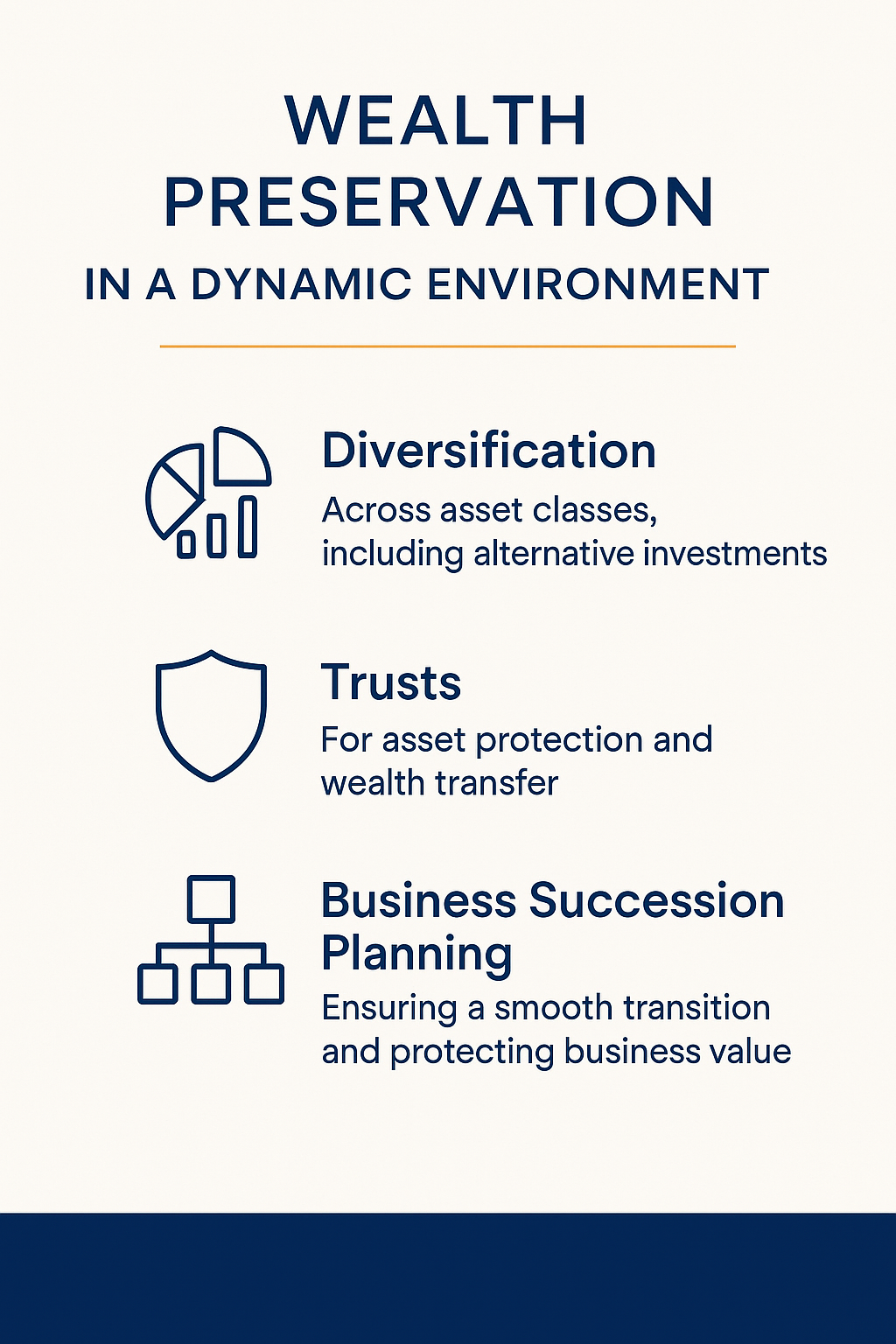
1. Diversification Beyond the Basics
Traditional diversification spreads investments across various asset classes like stocks, bonds, and cash. But in today’s environment, it may be wise to look beyond the basics.
Incorporating alternative investments such as real estate, or insurance-based vehicles could help reduce reliance on market performance and work to enhance risk-adjusted returns. These options aren’t for everyone—but for high-net-worth individuals and business owners, they could help add important balance and growth potential to an overall portfolio.¹
2. Trusts for Asset Protection and Wealth Transfer
Trusts are essential tools in wealth preservation. They can help protect your assets from creditors, lawsuits, and estate taxes—while allowing you to control how and when your wealth is distributed.
Whether you're planning for your children, aging parents, charitable causes, or business continuity, the right type of trust—revocable, irrevocable, or specialized—can provide tax advantages and long-term control over your legacy.²
3. Business Succession Planning
Your business is likely one of your most valuable assets. Without a formal succession plan in place, its value could diminish quickly in the event of retirement, disability, or an unexpected exit.
Succession planning is designed to help ensure a smooth transition of ownership and leadership, protecting the company’s future and your personal financial well-being. This includes valuation strategies, buy-sell agreements, and integrating succession into your estate and tax planning.³
If you haven’t yet built a full financial foundation for your business, I encourage you to also read:
👉 How Small Business Owners Can Approach Financial Planning for Long-Term Success
Conclusion:
Preserving wealth requires more than reacting to headlines—it requires strategic, long-term thinking. By diversifying with purpose, using trusts to help protect your assets, and preparing your business for the future, you can create a plan that holds up in any environment.
Let’s Talk
At BAS Financial, I specialize in helping business owners gain clarity around their finances and take meaningful action toward lasting security.
👉 Schedule a complimentary consultation
Sources:
¹ J.P. Morgan Private Bank. (2023). The Role of Alternative Investments in a Diversified Portfolio.
² IRS. (2024). Types of Trusts and Their Tax Implications.www.irs.gov
³ U.S. Small Business Administration. (2024). Business Succession Planning Basics.www.sba.gov
Material discussed is meant for general informational purposes only and is not to be construed as a recommendation or advice. Please note that individual situations can vary therefore, the information should be relied upon only when coordinated with individual professional advice. All investments contain risk and may lose value.